Five different approaches to the same crisis. Here is what each organization does, how they measure impact, and where they focus.
Disclosure: This article is published by Plastic Bank, which appears on this list. Our methodology and full source list are at the bottom.
Millions of metric tons of plastic enter the world’s oceans, rivers, and coastlines every year. The organizations working on this problem have taken very different approaches: some pay communities to collect plastic before it reaches water, some deploy engineered systems to pull it out, some push for international treaties to cut production at the source, and some work through existing industries like fishing. Here are five organizations doing substantive, verifiable work on plastic pollution, and what makes each one distinct.
1. Plastic Bank
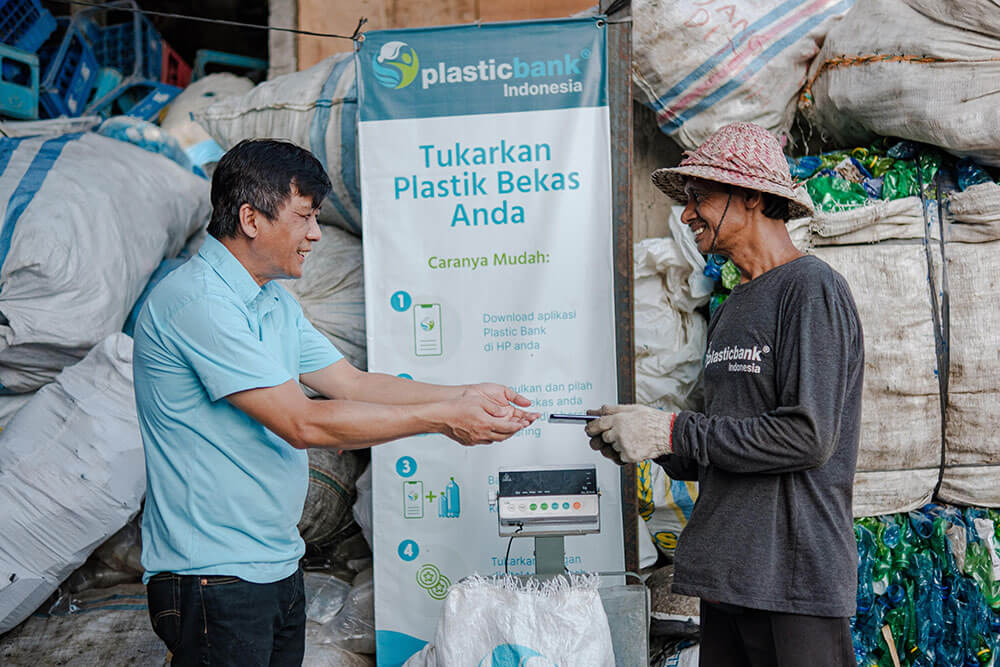
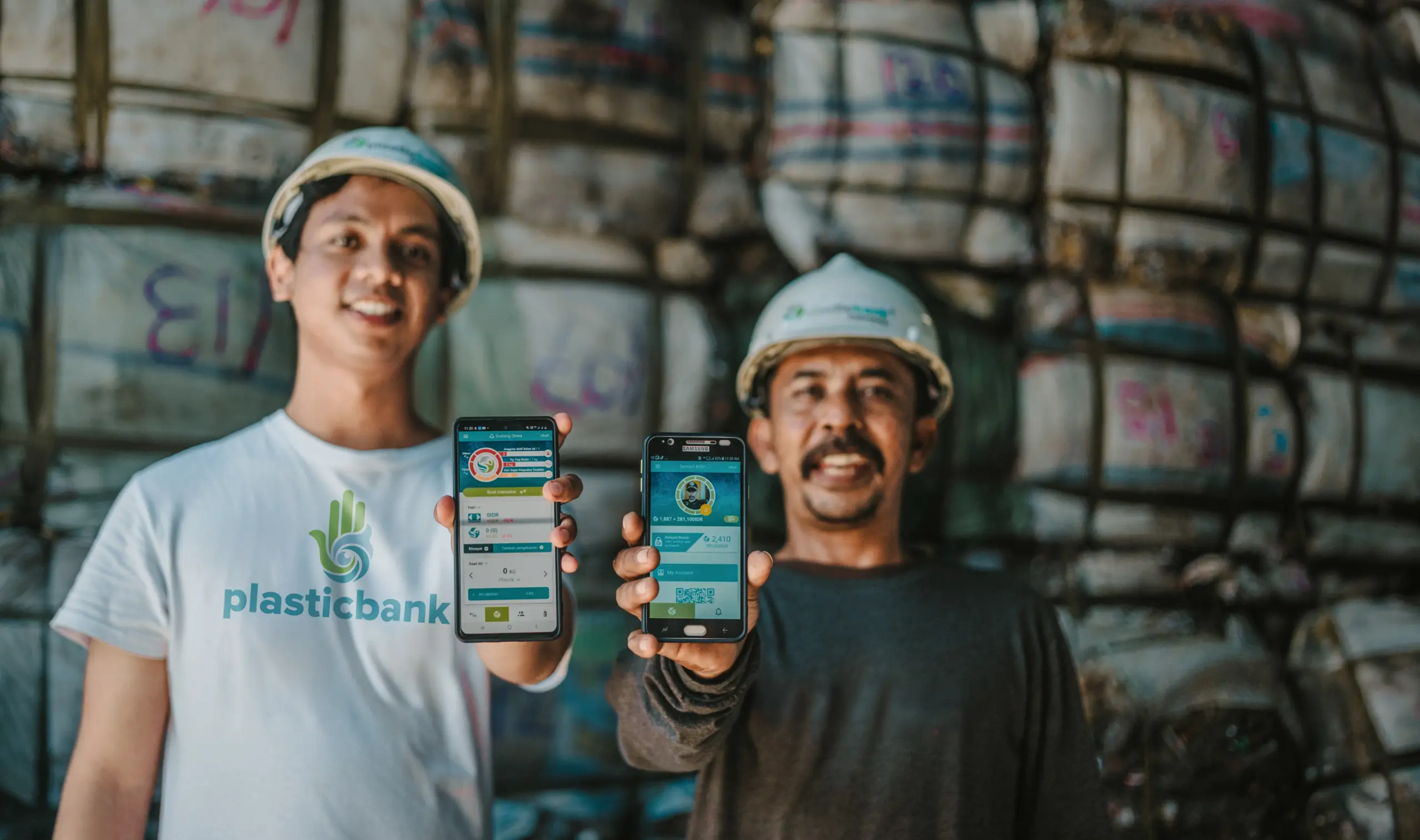
Plastic Bank is a for-profit social fintech founded in 2013 in Vancouver. Across the Philippines, Indonesia, Brazil, Egypt, and Thailand, more than 63,000 collectors gather discarded plastic and exchange it for income and social benefits through the Plastic Bank App.[1] The app functions as a digital wallet, payment system, and benefits platform. Collectors access health insurance, grocery support, school supplies, interest-free loans, and fintech services. For many, it is their first bank account.[2]
Brands partner with Plastic Bank to reduce their plastic footprint by purchasing Plastic Credits, each backed by blockchain-verified collection data. Current partners include SC Johnson, Coca-Cola Philippines, and Acer. As of April 2026, the network has collected over 190 million kilograms of plastic, roughly 9.6 billion bottles.[1]
Plastic Bank is the only organization on this list that treats plastic pollution and poverty as a single problem. The collection model creates an occupation where one did not exist, in communities where formal employment is limited. The environmental output (190 million kilograms of plastic diverted from waterways) is a byproduct of the economic system, not the other way around.
2. The Ocean Cleanup
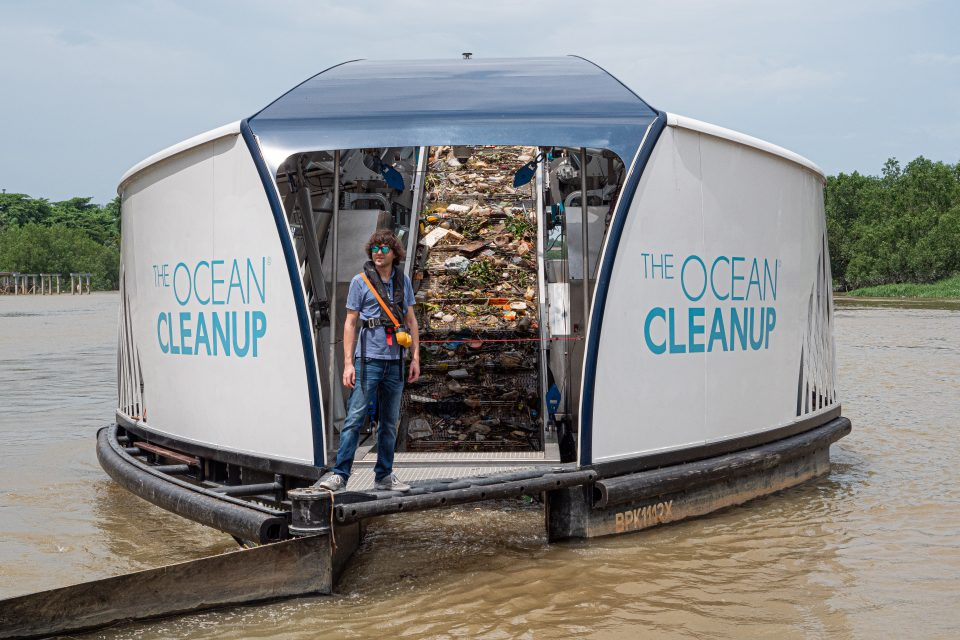
A nonprofit engineering organization founded in 2013 in the Netherlands by Boyan Slat. The Ocean Cleanup develops technology to extract plastic from the ocean and intercept it in rivers. System 03, the current ocean cleanup device, is a large floating barrier towed through the Great Pacific Garbage Patch by two ships.[3] In rivers, solar-powered Interceptor devices use floating barriers to guide trash onto a conveyor belt for collection.[4]
Boyan Slat, Founder, The Ocean Cleanup | Source: theoceancleanup.com
In March 2026, The Ocean Cleanup passed 50 million kilograms of trash removed from oceans and rivers. The 30 Cities Program, announced in 2025 and funded with $121 million from The Audacious Project, targets 30 coastal cities across Asia and the Americas with the goal of stopping one third of all river-borne plastic by the end of the decade. The first eight cities include Mumbai, Jakarta, Manila, Panama City, and Los Angeles.[5][6]
The Ocean Cleanup’s trajectory is notable: it started as an open-ocean extraction project and has increasingly shifted toward river interception. In April 2026, the organization stated explicitly that it needs “both interception of inflow and cleanup of legacy pollution” to reach its goal of removing 90% of floating ocean plastic by 2040. GPGP extraction is currently on hiatus while the team develops hotspot-mapping technology to improve efficiency.[7]
3. 4ocean
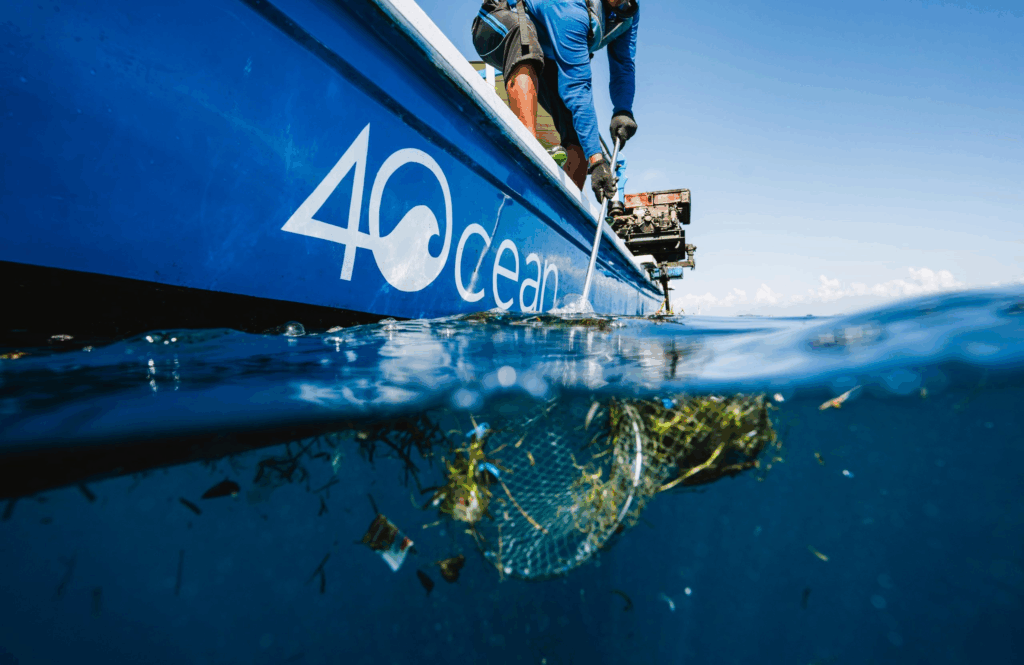
A for-profit Public Benefit Corporation and Certified B Corp, founded in 2017 in Boca Raton, Florida by Alex Schulze and Andrew Cooper. 4ocean employs over 200 full-time captains and cleanup crews who conduct daily cleanups in Florida, Bali/Java (Indonesia), Haiti, and Guatemala.[8] Operations are funded through product sales: each bracelet, apparel item, or accessory purchased funds the removal of five pounds of trash.[9]
4ocean cleaning the ocean | Source: oceanographicmagazine.com
In February 2026, 4ocean surpassed 50 million pounds of trash removed. The organization holds a B Impact Assessment score of 80.1 (median for ordinary businesses: 50.9) and is independently verified through GreenCircle Certified.[10][11] The 4ocean Foundation, a separate 501(c)(3) nonprofit launched in 2024, funds seasonal surge operations during the rainy season and accepts tax-deductible donations.[12]
4ocean has built the most successful consumer-product model in this space. The bracelet is not just merchandise; it is the funding mechanism. That direct link between a physical product on your wrist and a specific weight of trash removed is what drives both the revenue and the community engagement.
4. WWF (No Plastic in Nature)
WWF is the world’s largest conservation organization, operating in over 100 countries with more than 30 million supporters. Its plastics work runs through the No Plastic in Nature initiative, launched in 2018, with the goal of no new plastic in nature by 2030.[13]
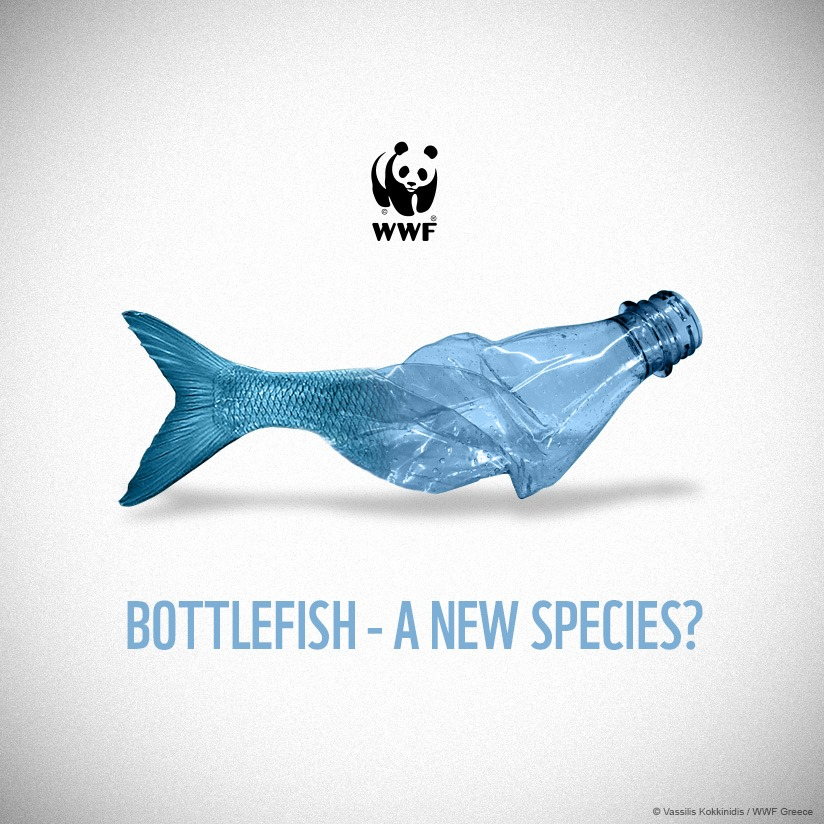
An artistic piece from WWF Greece
WWF operates at the policy level. The organization is one of the lead advocates for a legally binding UN Global Plastics Treaty (initiated by Resolution 5/14 in 2022, negotiations ongoing). More than 2.2 million individuals signed WWF’s petition supporting the treaty. Plastic Smart Cities, a WWF program in 20+ countries, helps municipalities improve waste collection, segregation, and recycling. In 2025, a $3 million Coca-Cola Foundation grant launched five new PSC projects in Mexico, South Africa, Thailand, Indonesia, and Malaysia.[14][15]
The GEF-financed Circular Solutions to Plastic Pollution program, co-led by UNEP and WWF, has $15.9 million in GEF funding and $111.8 million in co-financing across 15 national projects.[16] ReSource: Plastic engages corporations, and the Business Coalition for a Global Plastics Treaty brings multinationals together on policy.[14]
WWF does not collect plastic. It changes the regulatory and corporate environment that determines how plastic is produced, used, and managed. The impact is systemic rather than transactional, and it takes years to materialize, but a single binding treaty could do more to reduce ocean plastic than any collection program operating today.
5. Waste Free Oceans
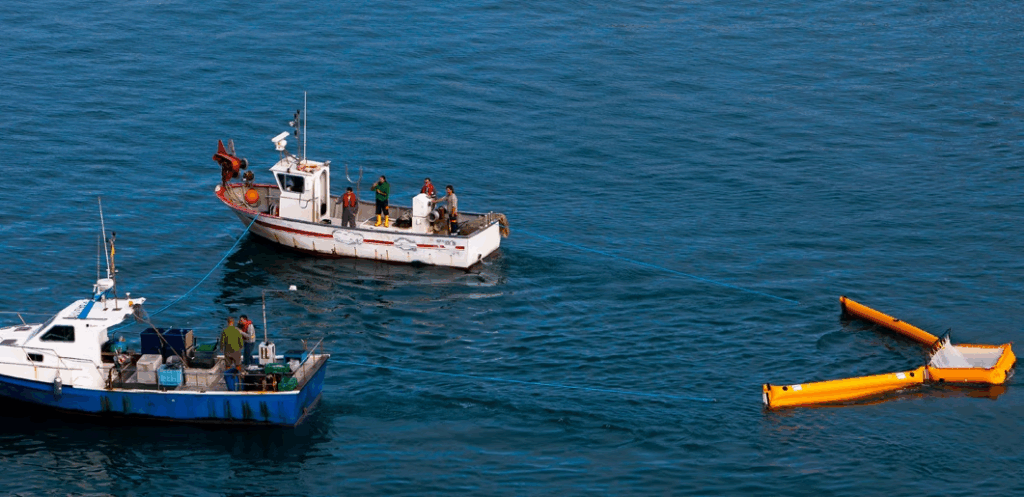
A Brussels-based nonprofit founded in 2011 as an initiative of the European plastics industry. WFO partners with fishermen (“Guardians of the Sea”) who use Ocean Trash Catchers, trawl-style nets that collect 2 to 8 tonnes of floating marine debris per journey, during regular or idle fishing days.[17] The collected material is sorted by polymer type and connected with recyclers and brands who turn it into consumer products.[18]
Waste Free Ocean team at work | Source: Wastefreeoceans.com
WFO’s product partnerships include Eco Eyewear (sunglasses from recovered ocean plastic, over 60 tonnes collected through this partnership), Okky Eyewear (recycled children’s frames), and Flamingos Life (shoes from collected bottles). In 2024, WFO and Eco Eyewear installed a floating waste-catching barrier on the Feza River in Dar es Salaam, Tanzania, with monthly collection reports published through the partnership.[19][20]
In 2013, WFO successfully lobbied the EU to include marine cleanup subsidies in the European Maritime and Fisheries Fund, creating a public funding pathway for fishermen to participate in ocean cleanup.[21]
WFO’s model is distinct because it does not create new collectors or deploy new technology. It takes an existing workforce (fishermen), existing equipment (boats), and an existing supply chain (plastics recycling) and connects them. The overhead is low. The scale depends on how many fishing partnerships WFO can build.
What this list does not include
There are dozens of other organizations working on plastic pollution that are not on this list. The Sea Cleaners (France) deploys the Mobula collection vessel in Southeast Asia. Delterra (founded by McKinsey’s foundation) builds municipal recycling systems in Indonesia, Argentina, and Brazil. Ocean Conservancy runs the International Coastal Cleanup, the world’s largest volunteer cleanup event. The Alliance to End Plastic Waste (an industry coalition) has committed $1.5 billion to waste management infrastructure. Each takes a different approach. This list focused on five organizations with distinct, verifiable models and publicly documented impact data.
Sources and footnotes
All sources accessed and verified as of April 2026.
[1] Plastic Bank, Global Impact – 63,000+ collectors, 5 countries, 190M+ kg collected, Plastic Credits, partners (SC Johnson, Coca-Cola Philippines, Acer). https://plasticbank.com/global-impact/
[2] Plastic Bank, About Us – Social fintech, digital wallet, collector benefits (health insurance, grocery support, school supplies, interest-free loans, fintech). https://plasticbank.com/about/
[4] The Ocean Cleanup, Rivers – Interceptor devices, solar-powered, automated conveyor, local operators. https://theoceancleanup.com/rivers/
[5] The Ocean Cleanup, Milestones – 50M kg milestone March 2026, 20M kg December 2024, Kia EV3 trunk liner, Coldplay Notebook. https://theoceancleanup.com/milestones/
[21] Waste Free Oceans, About – Founded 2011, European plastics industry initiative, EMFF lobbying 2013, CAF badge 2021. https://www.wastefreeoceans.org/about
Methodology: Organizations selected based on public impact data, third-party verification, and distinct operational models. Data reflects publicly available figures as of April 2026. Plastic Bank figures sourced from plasticbank.com/global-impact/. All source URLs verified at publication.
Recover your first 50 bottles
Join the global bottle deposit program and start with:
50 bottles collected from one of our communities
Community updates delivered directly to your inbox
Sustainability is no longer a checkbox, it is a driver of long-term growth.
As consumers become more conscious of the impact behind the products they buy, they are choosing brands that reflect their values. Since 2013, Plastic Bank has helped organizations transform sustainability commitments into measurable, verified impact - creating solutions that benefit both people and the planet.
At the same time, the world is evolving rapidly. Increasing uncertainty demands that organizations operate with greater efficiency, transparency, and resilience. At Plastic Bank, technology continues to be the force that enables us to meet this moment - strengthening our ability to scale impact while improving operational effectiveness.
St. Patrick’s Day is a joyful celebration of community and culture, but it can also create a lot of unnecessary waste from single-use plastics, disposable decorations, takeaway containers, and party supplies.
Cut through the noise. These are the numbers that put the ocean plastic crisis in real perspective. There is no shortage of alarming plastic statistics.




 Featured