How the Plastic Bank School Program works: Building recycling habits and creating measurable impact
Written by Audrey Trinidad28 May 20266-minute read
Share
Copy link
Schools shape more than what students know, they shape the habit they do every day. But when it comes to plastic waste, many schools face the same challenge: how do you turn awareness into consistent action?
That’s where the Plastic Bank School Program comes in.
Designed to be simple, rewarding, and trackable, the program helps schools transform everyday plastic waste into real environmental and social impact while empowering students to be part of the solution.
Change a life.
Without quitting your day job.
Juhari gathers plastic. You make it worth something. Join free, and the first 50 bottles are on us.
What is the Plastic Bank Schools Program?
The Plastic Bank Schools Program is a digital, incentivized recycling system that enables schools to collect, track, and monetize plastic waste.
At its core, the program connects three things:
Household participation
School-led waste management systems
A digital platform for tracking and rewards
By doing this, schools become part of a verified ecosystem that supports Extended Producer Responsibility (EPR) and reduces plastic pollution.
How the program Works
1. Students bring used recyclables to school
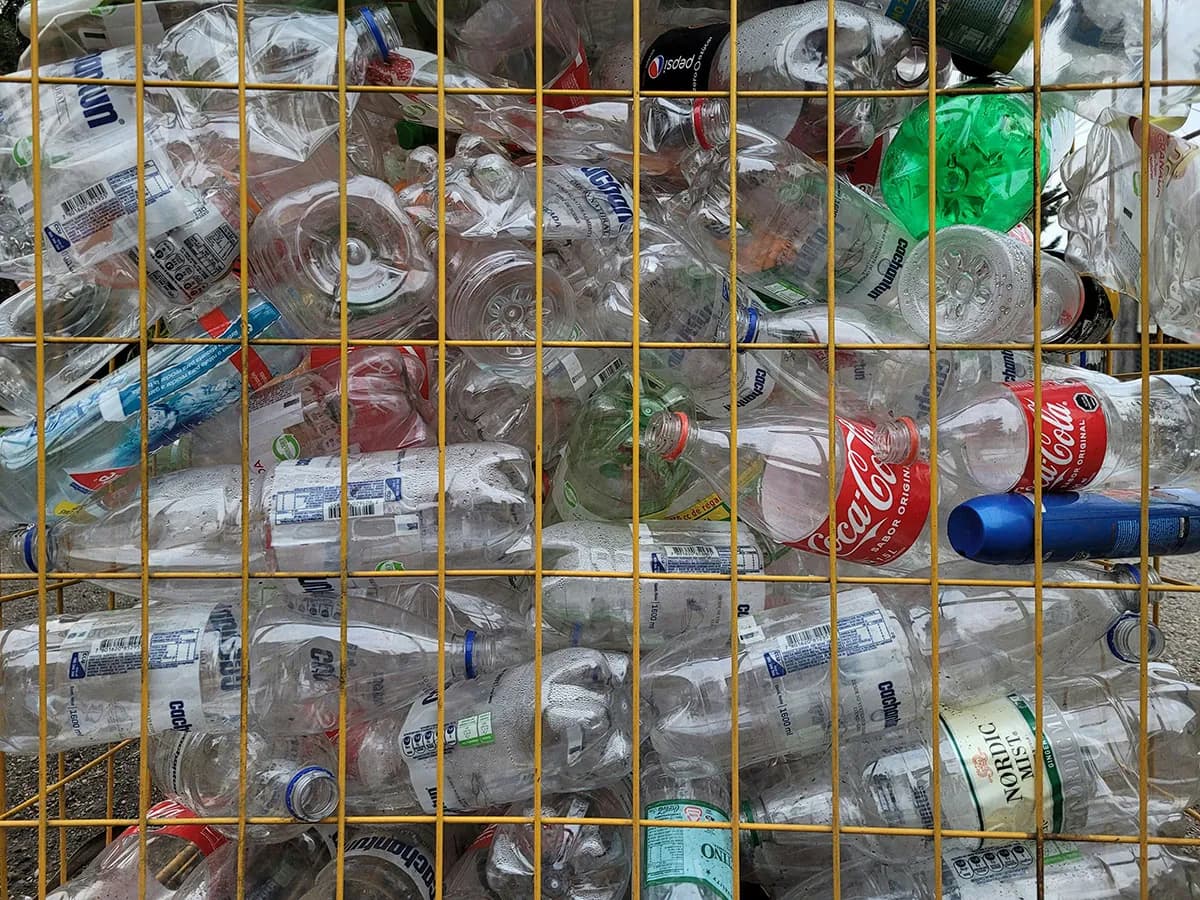
Students bring plastic recyclables like PET bottles, HDPE containers, and PP plastics. They can also bring other common recyclables such as glass, aluminum, paper, and beverage cartons. These are dropped off at the school’s Materials Recovery Facility (MRF) or waste bank or designated collection point.
This builds a simple habit, making waste segregation a part of everyday student life.
2. Schools ensure proper sorting
Each school assigns recycling champions. This could be:
Students
Teachers
School staff
Eco-clubs
Their role is to ensure materials are properly sorted and ready for collection. This step is critical because proper segregation increases the value of recyclables and ensures they can re-enter the circular economy.
3. Plastics are collected or sold to junkshops or junkyards
Schools can choose to:
schedule pickup with a Plastic Bank partner collection branch, or
sell the recyclables to their existing / preferred junkshop
This flexibility makes the program easy to adopt so that schools can integrate it into systems they already have.
4. Every transaction is recorded in the app
Here’s where the program becomes powerful. Using the Plastic Bank app, every collection or sale is recorded easily and conveniently and verified digitally.
Even if a school sells to a non-partner junkshop, they can still track these via the app by uploading the following details from the transaction
GPS location and if applicable, name of junkshop / junkyard
Photo of facade or storefront of junkshop / junkyard
Photos of materials delivered to the branch
Photo of the informal receipt
Selfie photo with the informal receipt
These processes ensure that no effort goes uncounted.
5. Schools earn rewards for every kilo collected
For every kilogram of plastic collected and recorded, schools earn tokens. These tokens can be tracked in the app, converted into real cash, and withdrawn via GCash or Gojek.
On top of that, schools can unlock:
Onboarding incentives
Champion rewards
Monthly rewards for every kilogram recycled
Recognition and rewards for top participating schools
This makes recycling both impactful and rewarding.
6. Plastics are recycled into Social Plastic
The system ensures that collected plastics don’t end up in landfills. Instead, they are processed into Social Plastic, which can be used by global brands to create new products, allowing us to close the loop in the circular economy.
Why it matters for schools
1. Supports school programs in the Philippines and in Indonesia
School onboarding session in the Valenzuela school district in the Philippines
The Department of Education’s WASH in Schools (WinS) Program in the Philippines, a national initiative that is focused on improving health, hygiene, and sanitation in schools
The program aligns with Water, Sanitation, and Hygiene goals by:
Promoting proper waste segregation and solid waste management
Creating cleaner school environments
Encouraging student participation
The Indonesia Ministry of Primary and Secondary Education Kemendikdasmen programs for waste management in elementary and junior high schools
1. P5 (Project for Strengthening the Profile of Pancasila Students)
As part of the Kurikulum Merdeka (Independent Curriculum), one of its mandatory themes is “Sustainable Lifestyle,” with the goal of building critical awareness and a sense of responsibility towards the environment from a young age.
Implementation in SD (Elementary): Students engage in hands-on projects like creating crafts from recycled materials or learning the basics of sorting organic vs. inorganic waste.
Implementation in SMP (Junior High): Students tackle more complex issues, such as managing a school “Waste Bank” (Bank Sampah), producing compost from canteen scraps, or designing campaigns to reduce single-use plastics.
2. Gerakan Sekolah Sehat (GSS – Healthy School Movement)
Kemendikdasmen actively promotes the Healthy School Movement, which focuses on five pillars of health, including Environmental Health (Sehat Lingkungan) to create a clean, waste-free school environment. Activities include optimizing sorted trash bins, ensuring proper sanitation facilities, and establishing habits like “LISA” (Lihat Sampah Ambil — See Trash, Pick it Up) through routine communal cleaning.
3. Adiwiyata School Program (In Collaboration with KLHK)
This is a joint program with the Ministry of Environment and Forestry (KLHK) where schools are encouraged to implement the PBLHS Movement (Movement for Environmentally Concerned and Cultured Schools). For a school to be certified as an Adiwiyata School at the Regency, Provincial, National, or Independent levels, one primary criterion must be to implement waste management through reduction sorting, and processing waste.
2. Builds lifelong habits
When students actively participate in recycling, it becomes more than a lesson, it becomes standard behavior.
3. Creates measurable impact
Through the app, schools can track total plastic collected, monitor participation among households in the community, and report verified environmental impact to the relevant local government entities.
This is especially valuable for schools partnering with organizations or companies supporting sustainability initiatives.
4. Extends beyond the classroom
The program doesn’t stop at school gates.
Schools register parents and other household members to expand impact and turn recycling into a shared responsibility.
What types of materials can be collected?
Schools can collect a wide range of recyclables. When collected, the following materials have corresponding digital rewards:
PET bottles
HDPE containers
PP plastics
Flexible plastics (such as grocery bags, snack wrappers, and ziplock pouches)
Multi-layer beverage cartons (such as milk and juice cartons)
Meanwhile, the following are other recyclables accepted by junkshops / junkyards:
Paper and cardboard
Glass bottles
Metal cans
This ensures that all recycling efforts are recognized, even beyond plastic.
How schools get started
Joining the program is simple:
Download and register to the Plastic Bank app
Register a school account and designate the recycling champion/s
Link a GCash / Gojek account for rewards redemption
Start selling the collected recyclables to the local recyclers/junkshops/junkyards.
Ensure that every sales transaction is recorded on the app.
Once activated, schools gain access to:
Learning materials for students and households on recycling.
Real-time tracking of recycled materials
Digital Rewards
Ongoing support through group channels
A new way to think about school recycling
The Plastic Bank Schools Program goes beyond traditional recycling programs. It transforms waste into an easy recycling opportunity for households, financial incentives and verified impact for schools, and environmental action for communities.
When schools are empowered with the right tools, systems, and incentives, they don’t just manage waste better, they inspire a generation to lead real change in their communities.
Recover your first 50 bottles.
Join the global bottle deposit program and start with:
✓50 bottles collected from one of our communities
✓Community updates delivered directly to your inbox
Have you ever wondered where all your plastic packaging goes? The fabric conditioner you used last week, the bottled water you thoughtlessly threw in the garbage, or the countless shampoo sachets you have used in the past month – do you know where all of these go?
Extended Producer Responsibility (EPR) is more than a regulatory checkbox—it’s a strategic framework that holds producers accountable for the full life cycle of the products and packaging they introduce into the market.
The Philippines is dealing with a serious plastic waste problem—about 2.7 million metric tons of plastic are thrown away each year, and a lot of it ends up in our oceans.
Photo by Markus Spiske on Unsplash Our planet is drowning in plastic waste. Discarded single-use plastic is polluting beyond our communities, reaching even the most remote locations in Antarctica1 and the high peak of Mt. Everest2. What’s worse is that plastic pollution now affects human blood. Microplastics appeared in blood samples of 17 out of […]