Are you an obliged enterprise under the EPR law in the Philippines?
Written by Audrey Trinidad11 Dec 20255-minute read
Photo by Jakub Żerdzicki on Unsplash
Share
Copy link
If your company sells or imports products into the Philippines, you may already fall under the EPR Law Philippines, also known as Republic Act No. 11898 or the Extended Producer Responsibility (EPR) Act of 2022.1 This law places the responsibility for plastic packaging waste on companies that manufacture, import, or sell packaged goods in the country.
Understanding whether you are an obliged enterprise under RA 11898 is crucial for maintaining compliance, protecting your brand reputation, and meeting your sustainability commitments. For APAC or global businesses operating in the Philippines, it’s time to evaluate where your company stands.
Change a life.
Without quitting your day job.
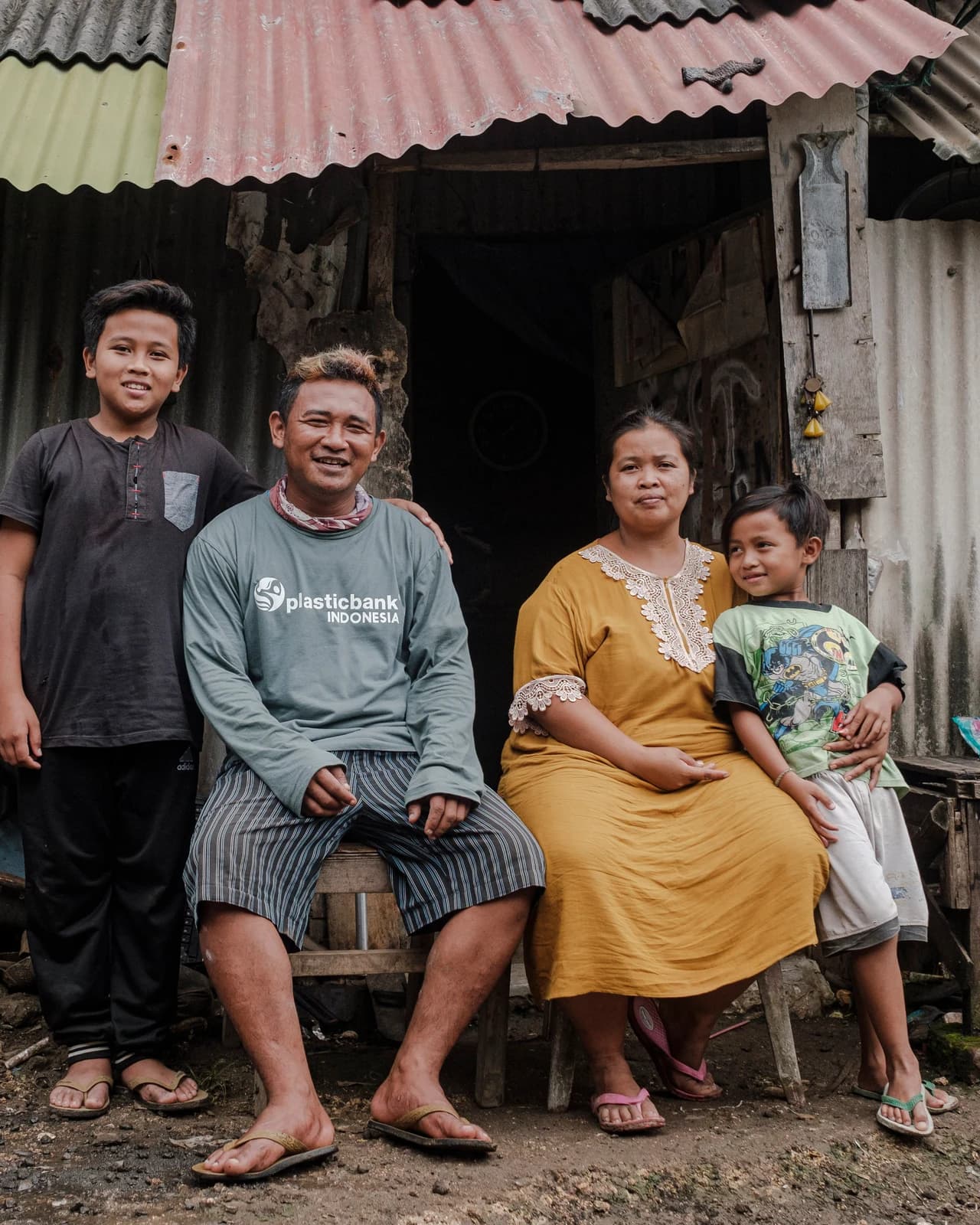
Juhari gathers plastic. You make it worth something. Join free, and the first 50 bottles are on us.
What Is the EPR Law Philippines (RA 11898)?
The EPR Law Philippines supports the Ecological Solid Waste Management Act of 20002 and institutionalizes the principle of extended producer responsibility, the idea that businesses must take accountability for the post-consumer waste of their plastic packaging.
Its goal is to reduce plastic pollution by requiring companies to collect, recover, and divert a percentage of their plastic footprint each year. These obligations scale up from 20 percent in 2023 to 80 percent by 2028, creating a predictable pathway toward full circularity.
For international companies selling into the Philippines, compliance isn’t optional. Failure to register or meet recovery targets can result in fines ranging from ₱5 million to ₱20 million, alongside potential suspension of business permits.
What is an Obliged Enterprise under EPR?
Under RA 11898, an obliged enterprise is a product producer responsible for implementing an EPR programme. This includes:
Brand owners – companies selling or supplying goods under a brand or label in the Philippines.
Manufacturers or importers – entities placing packaged products into the local market.
To qualify as an obliged enterprise, a company typically falls under the large enterprise category. These are companies with total assets exceeding ₱100 million (excluding land), as defined by the Department of Trade and Industry under the Micro, Small and Medium Enterprise law.3 Even smaller companies may be covered if they operate under a large parent brand that crosses this threshold.
If your business sells consumer goods into the Philippines, particularly those using rigid or flexible plastic packaging, there’s a strong likelihood you meet the definition of an obliged enterprise.
Photo by Firmbee.com on Unsplash
EPR Obligations for Companies in the Philippines
Once you’ve determined that your company is covered by the law, here’s what compliance involves:
1. Registration and EPR Programme Submission
Obliged enterprises must register their EPR programme with the Department of Environment and Natural Resources (DENR) through the National Ecology Center. The programme must detail how your company will reduce, recover, and divert plastic waste in measurable, traceable ways.
2. Plastic Footprint Measurement
You must calculate how much plastic packaging your business brings into the Philippine market annually. This baseline must be audited by a third party as it determines your required recovery target.
3. Plastic Recovery and Diversion
Companies must recover an increasing share of their packaging footprint each year:
Year
Recovery Target
2023
20%
2024
40%
2025
50%
2026
60%
2027
70%
2028 onwards
80%
Recovery can be achieved through recycling, reuse, redesign, substitution, or verified partnerships that collect and divert plastic from the environment.
4. Third-Party Audit and Reporting
Each year, obliged enterprises must submit an EPR Compliance Audit Report (ECAR) verified by an accredited independent auditor. These confirm your recovery totals and programme performance.
5. Record-Keeping and Transparency
Maintain documentation of waste recovery, recycling, and partner engagements. Transparent traceability systems, such as blockchain-secured reporting, help ensure compliance and public trust.
6. Continuous Programme Improvement
Beyond recovery targets, the law encourages design innovation, use of recycled materials, and community partnerships that strengthen local waste ecosystems.
7. Understand the Penalties for Non-Compliance
Companies that fail to register an EPR programme, meet recovery targets, or submit verified EPR Compliance Reports face significant financial penalties. Moreover, the Department of Environment and Natural Resources has emphasized strict enforcement to ensure compliance. Under RA 11898, fines range from:
First offense: ₱5 million to ₱10 million
Second offense: ₱10 million to ₱15 million
3rd offense: ₱15 million to ₱20 million, with the possibility of business permit suspension.
Negligence that results in environmental harm can also expose companies to further liabilities, making early compliance and verified recovery partnerships critical for risk management.
EPR Reporting Requirements Philippines: What Global Companies Need to Know
For multinational enterprises, the Philippines’ EPR system demands both local registration and operational alignment. You must ensure that your Philippine subsidiary or distributor is officially registered and that data from your regional operations is traceable and verifiable.
Deadlines are strict: EPR Compliance Reports are due every June 30 of the following year, with audited documentation required. The DENR Administrative Order 2024-04 guidelines4 detail how compliance is verified and reported to DENR.
Aligning early with a credible third-party partner makes this process smoother and less risky.
Why Partnering With Plastic Bank Matters
Navigating EPR compliance in a complex market like the Philippines requires expertise. Plastic Bank offers:
Traceable plastic recovery that directly supports national EPR targets.
Independent, audit-ready data for ECR and ECAR submissions.
Community-based collection infrastructure that creates social impact while meeting diversion goals.
Strategic consultation for programme design, footprint measurement, and recovery scaling.
Plastic Bank transforms compliance into a positive-impact opportunity by helping brands prevent plastic pollution while empowering local communities across Southeast Asia.
Beyond Compliance: Building Value Through Responsibility
Treat EPR compliance as more than a legal obligation. It’s a gateway to:
Enhanced brand trust among eco-conscious consumers.
Improved ESG ratings through verified impact reporting.
Operational efficiency from better packaging design and waste management.
Resilience against evolving regional regulations.
Meaningful social impact, supporting livelihoods and environmental restoration.
APAC and global companies that integrate these practices early can lead the transition toward a truly circular economy.
From Obligation to Opportunity
If you operate or sell in the Philippines, the question shouldn’t simply be whether EPR applies. It should be how ready are you to comply and lead. The EPR Law Philippines under RA 11898 Extended Producer Responsibility is fully in force, and enforcement is tightening each year.
By acting now, you can future-proof your operations, build consumer trust, and contribute to a cleaner, more inclusive environment.
Have you ever wondered where all your plastic packaging goes? The fabric conditioner you used last week, the bottled water you thoughtlessly threw in the garbage, or the countless shampoo sachets you have used in the past month – do you know where all of these go?
Extended Producer Responsibility (EPR) is more than a regulatory checkbox—it’s a strategic framework that holds producers accountable for the full life cycle of the products and packaging they introduce into the market.
The Philippines is dealing with a serious plastic waste problem—about 2.7 million metric tons of plastic are thrown away each year, and a lot of it ends up in our oceans.
Photo by Markus Spiske on Unsplash Our planet is drowning in plastic waste. Discarded single-use plastic is polluting beyond our communities, reaching even the most remote locations in Antarctica1 and the high peak of Mt. Everest2. What’s worse is that plastic pollution now affects human blood. Microplastics appeared in blood samples of 17 out of […]
Compliance Reporting and Audit Guidelines for Republic Act No. 11898 or the Extended Producer Responsibility Act of 2022, Department of Environment and Natural Resources, https://apidb.denr.gov.ph/infores/uploads/DAO-2024-04.pdf