Written by Audrey Trinidad18 Mar 20265-minute read
Share
Copy link
Plastic waste is one of the most visible environmental challenges of our time—and schools are uniquely positioned to lead the solution. From cafeterias to classrooms, daily school operations generate significant amounts of plastic waste, often without intention or awareness.
Understanding how schools can reduce plastic waste is not just about cutting down on trash. It is about shaping habits, influencing communities, and empowering the next generation to take action.
Schools have an opportunity to become powerful hubs of change, especially in urban and coastal environments across the world that bear the brunt of plastic pollution. With the right strategies, even small actions can create ripple effects far beyond campus walls.
Below are eight proven strategies that schools can implement to reduce plastic waste effectively and sustainably.
Change a life.
Without quitting your day job.
Juhari gathers plastic. You make it worth something. Join free, and the first 50 bottles are on us.
1. Conduct a school waste audit to understand the problem
Before making changes, schools need a clear picture of their waste.
A school waste audit helps identify:
The types of plastic being used
Where waste is generated (canteens, events, classrooms)
Opportunities for reduction
Schools that conduct audits can be more effective in reducing waste because decisions are data-driven rather than assumed. A 2025 study published in the International Journal of Education Management Rivers State University found that waste audit and reduction plans enhanced the sustainable utilization of instructional facilities in secondary schools.1
Schools can also partner with local environmental groups to run student-led audits so that the process can turn into a hands-on learning experience.
Why it works: You cannot reduce what you do not measure. Audits create clarity and accountability.
2. Eliminate single-use plastics in canteens
Canteens are often the largest source of plastic waste in schools.
Common culprits include:
Plastic utensils
Sachets and wrappers
Disposable cups and straws
Schools can reduce plastic waste in schools by:
Switching to reusable utensils and trays
Encouraging students to bring their own containers
Partnering with vendors that use minimal or compostable packaging
In many cities, local ordinances already encourage reduced single-use plastics, making it easier for schools to align with broader policy efforts.
Why it works: Targeting high-volume waste sources leads to immediate and visible impact.
3. Introduce refill and reuse systems
One of the most practical ways to reduce plastic waste in schools is to replace disposable systems with refillable ones.
Examples include:
Water refilling stations to eliminate bottled water
Bulk purchasing of cleaning supplies
Refillable school supplies such as markers and pens
In Southeast Asia, refill culture is growing, and schools can play a key role in normalizing it among students.
Why it works: It shifts behaviour from convenience-driven consumption to conscious reuse.
4. Integrate environmental education for students
Reducing plastic waste is not just operational, it is educational.
Embedding environmental education for students into the curriculum ensures long-term impact. Topics can include:
The lifecycle of plastic
The impact of plastic pollution on communities
Circular economy principles
Interactive approaches work best:
Student-led campaigns
Waste segregation challenges
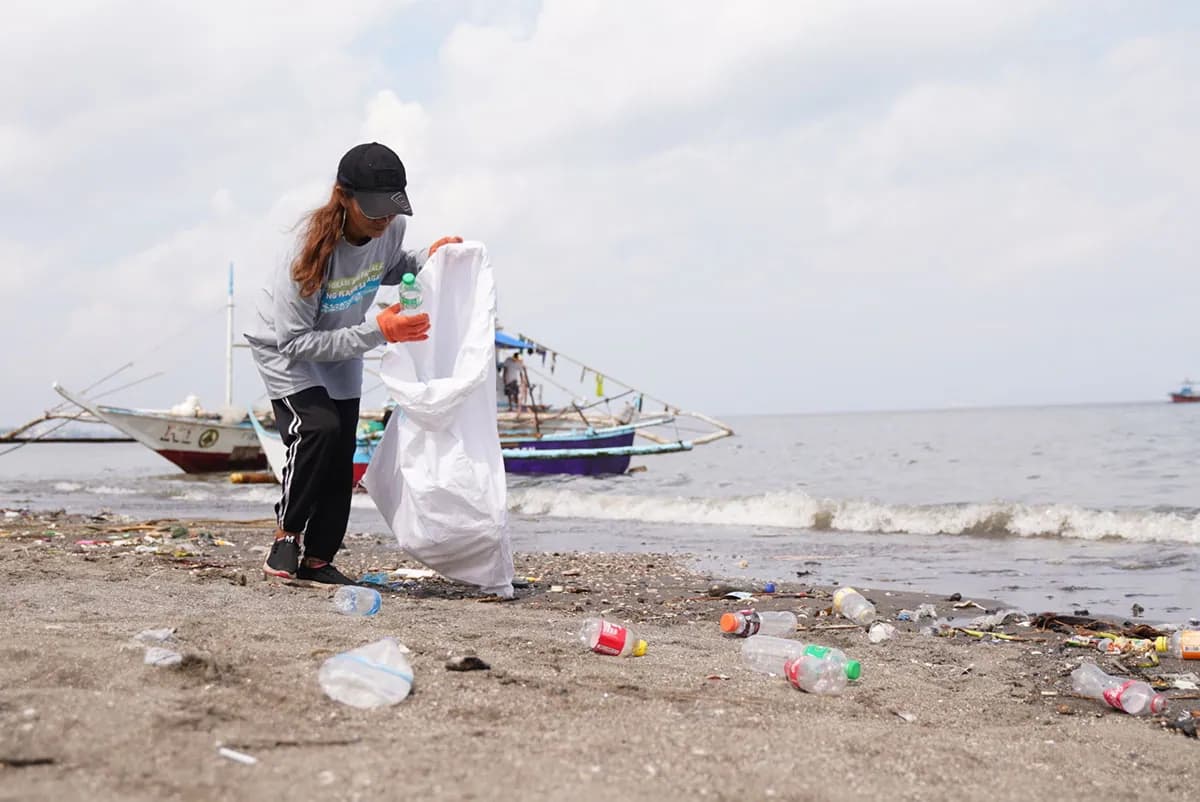
Community clean-up drives
UNESCO emphasizes that education programmes need to integrate sustainable consumption so that young people can determine the appropriate balance between their rights as consumers and their responsibilities as citizens.2
Why it works: Students become advocates, not just participants.
5. Implement effective waste segregation systems
Even when plastic use cannot be eliminated, proper school waste management ensures it is handled responsibly.
Schools should:
Provide clearly labelled bins (plastic, organic, residual)
Train students and staff on proper segregation
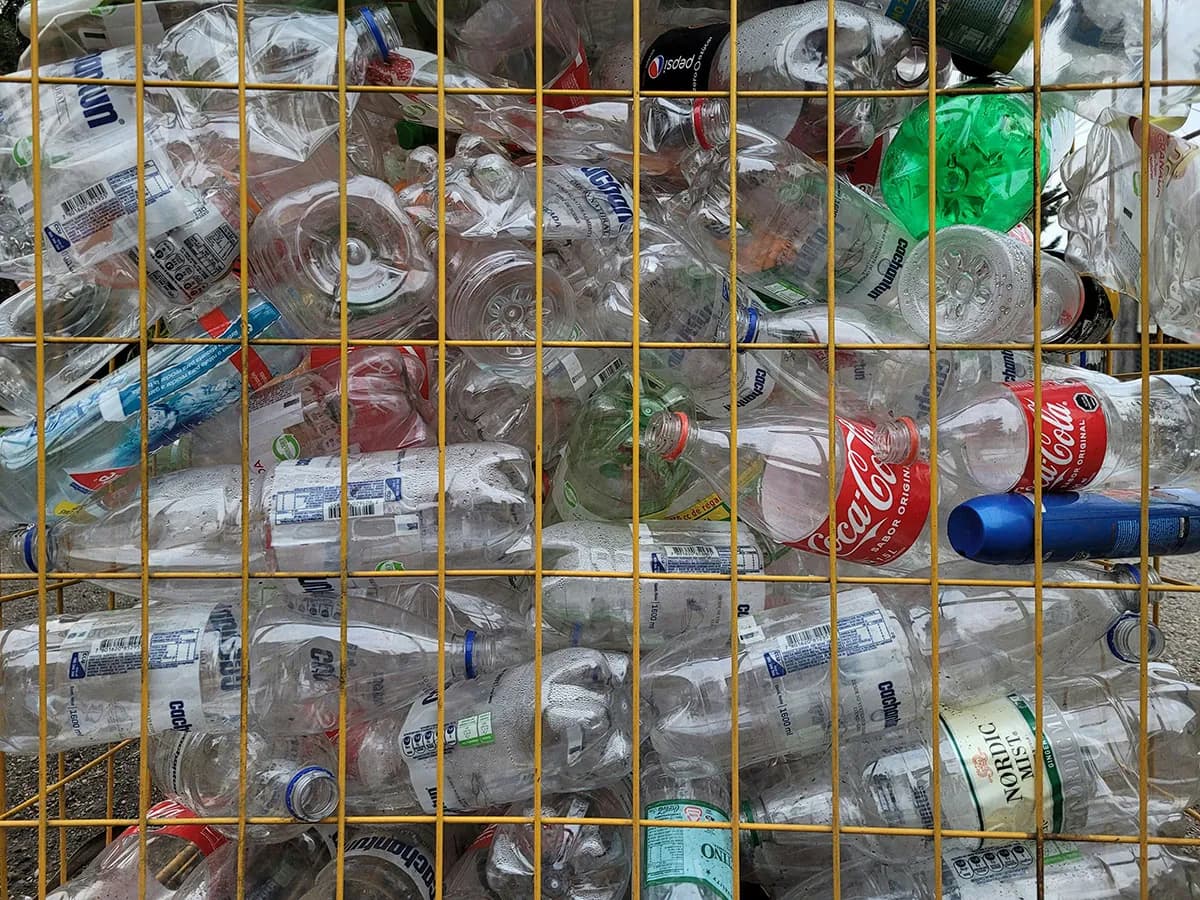
Partner with local recyclers or collection programs
In the Philippines, segregation at source is mandated under the Ecological Solid Waste Management Act (RA 9003)3, yet implementation remains inconsistent.
Schools that lead by example help reinforce these policies in everyday life.
Why it works: Proper sorting increases recycling rates and reduces environmental leakage.
6. Partner with local organizations and impact programs
Schools do not need to solve this alone.
Collaborating with organizations focused on plastic waste can:
Provide infrastructure and expertise
Connect schools to recycling ecosystems
Create measurable impact
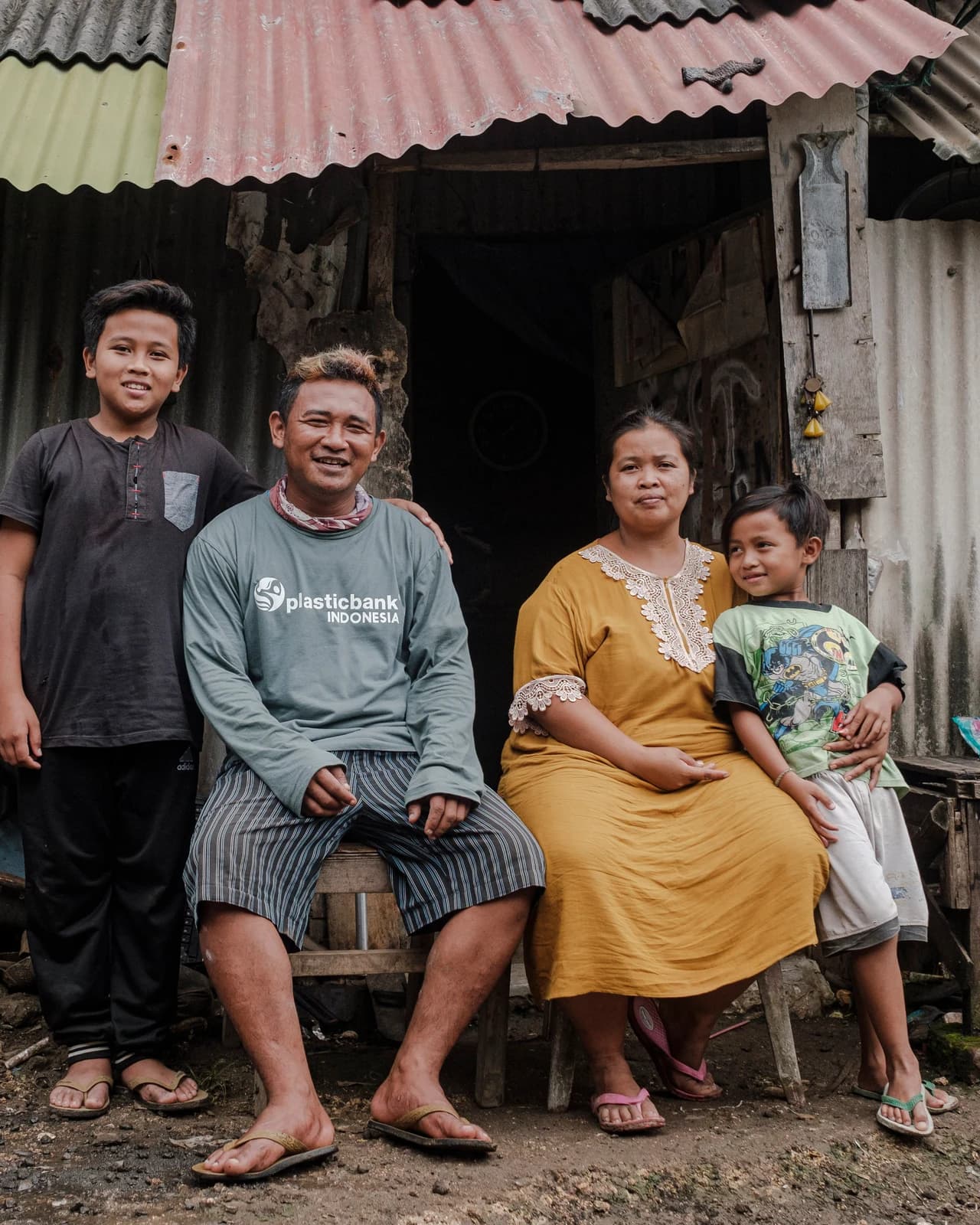
For example, Plastic Bank enables communities to collect plastic waste and exchange it for income and benefits, helping both the environment and livelihoods.
Schools can support such initiatives by:
Hosting collection drives
Educating students about ethical recycling ecosystems
Linking waste reduction efforts to real-world impact
Why it works: Partnerships extend impact beyond school boundaries and into communities.
7. Rethink school events and activities
School events often generate large amounts of plastic waste in a short time.
To reduce this:
Replace bottled drinks with refill stations
Use reusable decorations instead of plastic banners
Avoid giveaways that create unnecessary waste
In Southeast Asia, festivals and gatherings are culturally significant. Schools can lead by showing that celebration does not have to come at the expense of the environment.
Why it works: Events are high-visibility opportunities to model sustainable behaviour.
8. Empower student leadership and green teams
Sustainable change is strongest when driven from within.
Creating student-led green teams can:
Monitor waste reduction efforts
Lead awareness campaigns
Propose new sustainability initiatives
In many Philippine schools, eco-clubs have successfully led plastic-free campaigns, proving that students are not just learners, they are leaders.
Why it works: Ownership drives consistency and long-term success.
The bigger picture: schools as catalysts for change
When schools commit to reducing plastic waste, they do more than clean up their campuses.
They:
Shape lifelong habits
Influence families and communities
Contribute to national and global sustainability goals
In regions like Southeast Asia, where plastic waste management systems are still evolving, schools play a critical role in bridging the gap between awareness and action.
Small actions, scalable impact
Learning how schools can reduce plastic waste is not about perfection, it is about progress.
By implementing strategies like waste audits, refill systems, environmental education, and partnerships, schools can significantly reduce their plastic footprint while empowering students to become part of the solution.
Schools are where habits begin. What students learn today shapes the systems of tomorrow.
If we want a future where plastic waste no longer pollutes the environment or limits opportunity, we must start where learning happens.
Recover your first 50 bottles.
Join the global bottle deposit program and start with:
✓50 bottles collected from one of our communities
✓Community updates delivered directly to your inbox
Have you ever wondered where all your plastic packaging goes? The fabric conditioner you used last week, the bottled water you thoughtlessly threw in the garbage, or the countless shampoo sachets you have used in the past month – do you know where all of these go?
Extended Producer Responsibility (EPR) is more than a regulatory checkbox—it’s a strategic framework that holds producers accountable for the full life cycle of the products and packaging they introduce into the market.
The Philippines is dealing with a serious plastic waste problem—about 2.7 million metric tons of plastic are thrown away each year, and a lot of it ends up in our oceans.
Photo by Markus Spiske on Unsplash Our planet is drowning in plastic waste. Discarded single-use plastic is polluting beyond our communities, reaching even the most remote locations in Antarctica1 and the high peak of Mt. Everest2. What’s worse is that plastic pollution now affects human blood. Microplastics appeared in blood samples of 17 out of […]
Sources
Jennifer Igbudu, John Iibi, Educational Waste Audit and Reduction Plans for Sustainable Utilization of Instructional Facilities in Public Secondary Schools in Rivers State, International Journal of Educational Management, January 2025, https://ijedm.com/index.php/ijedm/article/view/57