
Skip to content
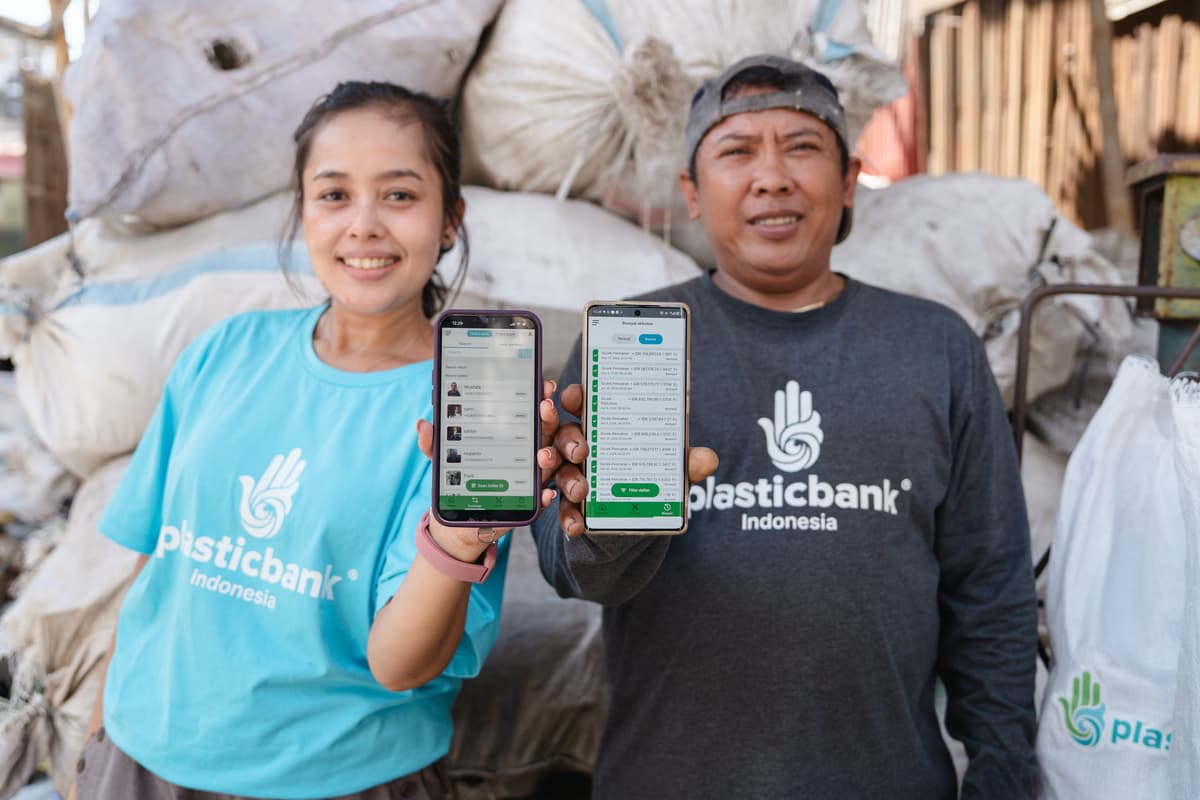
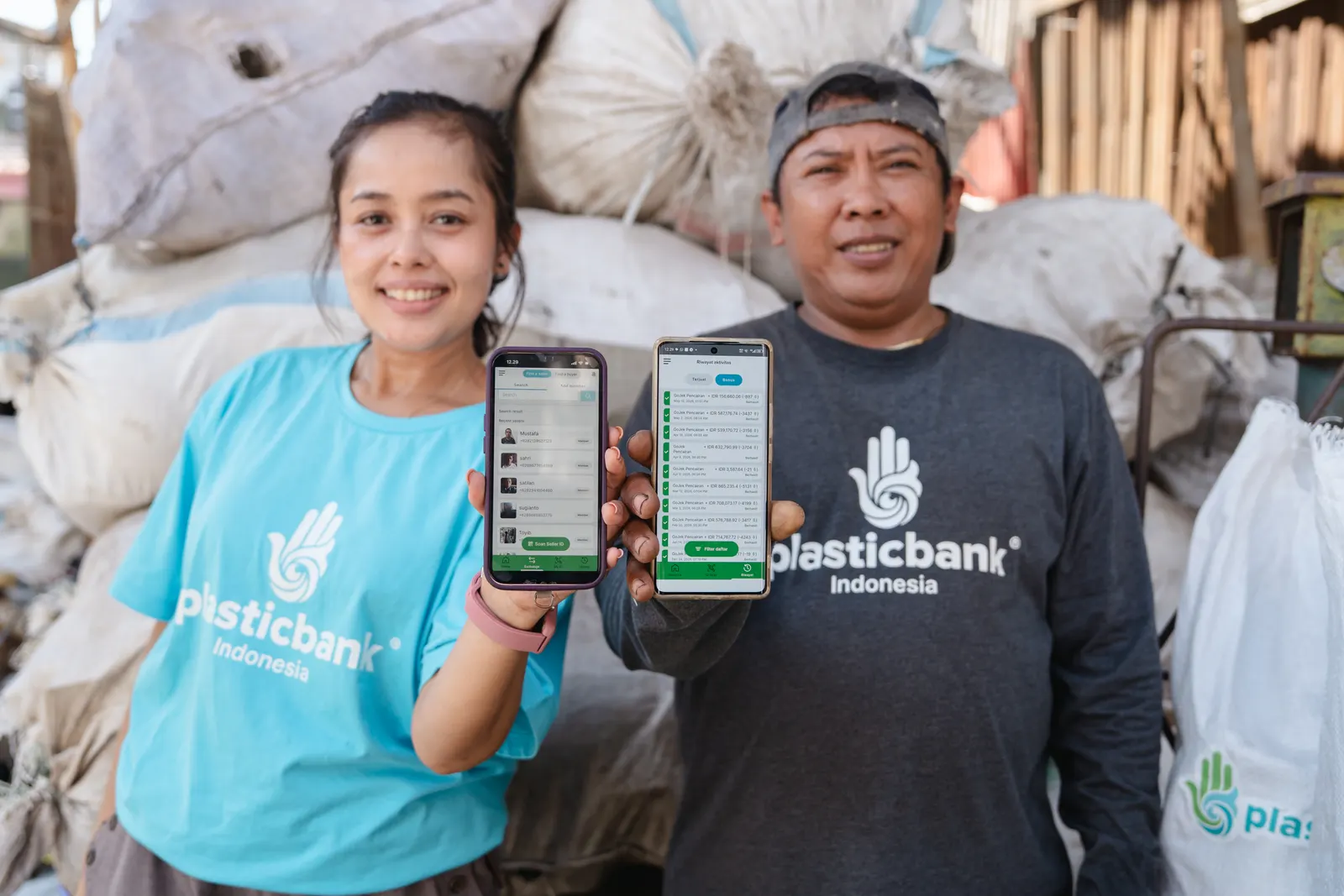
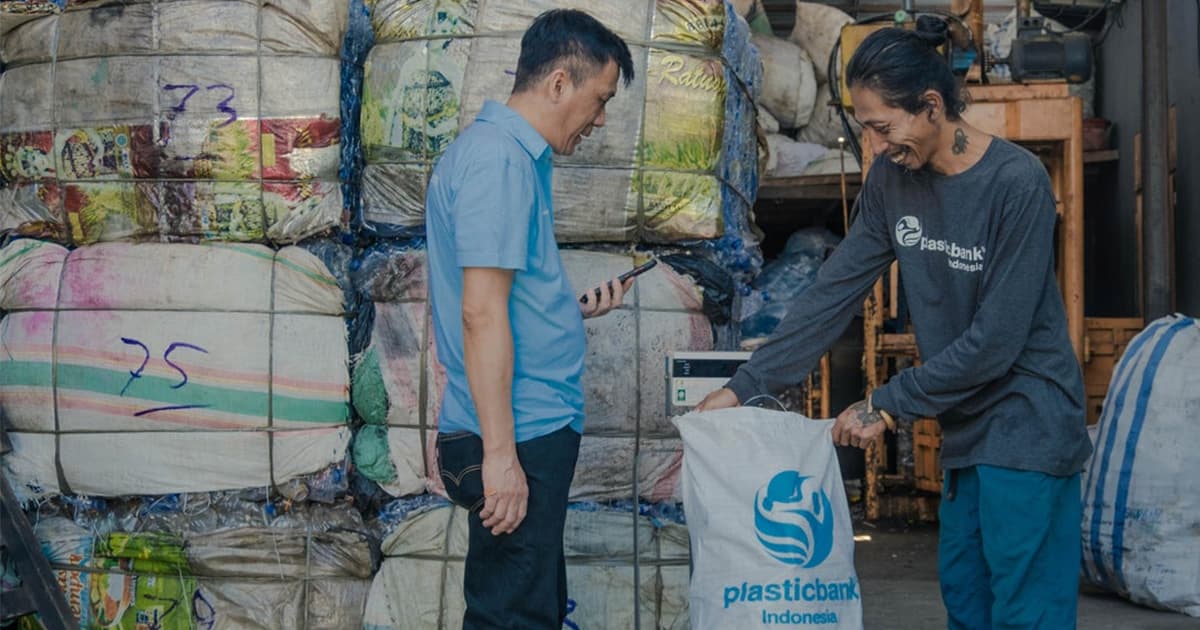
Two Plastic Bank collection members showing the Plastic Bank app on their phones at a collection branch in Denpasar, Indonesia

Our technology

Every kilogram traced. Every bonus proven.

The Plastic Bank app records every exchange, from the collector at a collection branch to the processor who recycles the plastic. A blockchain secures the record, and a plastic credit only exists once the collector’s bonus is paid.

Talk to our teamRead the plastic credit methodology →
What the platform has recorded so far
10.6B+bottles exchanged for extra income.
83,869collectors
213.4M kgplastic collected

What only Plastic Bank does.

One platform pays collectors, traces every kilogram and reports it to the buyer. These are the parts no one else puts together.

  • The Plastic Chain

    Every kilogram is traced from the collector to the collection branch, the aggregator and the processor who recycles it, in one connected chain of transactions.

  • No credit without a paid bonus

    A plastic credit can only be created once the plastic has reached a processor and the collector’s bonus has been paid. That payment is the proof that someone’s life is better because of the plastic credit you bought.

  • An audit trail down to the collector

    Enterprise partners see every transaction and every bonus payment behind their impact, and each kilogram has one owner: the buyer it is assigned to.

  • Age-verified collectors

    Every collector is 18 or older and age-verified in the Plastic Bank app, with identity checks that keep child labour out of the chain.

From a bottle in a collector’s hand to a line in your report.

Six steps, each recorded in the Plastic Bank app as it happens.

A collector picks up a plastic bottle from the grass beside a Plastic Bank collection bag in Denpasar, Bali
  1. Weighed and paid at the branch

    A collector brings gathered plastic to a certified collection branch. It is sorted and weighed by type and colour on a scale the collector can see, then paid for in cash at the market rate.

  2. Recorded in the app

    The branch records the exchange against the collector’s age-verified account: weight, material and price. The collector can see every exchange in their history.

  3. Delivered to a processor

    The branch sells the plastic on to a partner processor, which records the purchase and uploads a photo of its receipt. The receipt has to match the weight, material and price in the app.

  4. Checked before it counts

    Every transaction is reviewed for errors and fraud, and checked daily: volumes along the chain, price gaps, repeated volumes, sales without a receipt, sudden spikes. Only confirmed transactions can become plastic credits.

  5. The bonus makes the credit

    Once the chain from collector to processor is complete, the collector’s bonus is paid in tokens to their digital wallet, on top of the market rate. There is no plastic credit without that payment.

  6. Assigned to your order

    The kilogram, its bonus and its impact go to one buyer’s order under a unique claim ID, and appear in that buyer’s Impact Hub with the audit trail and a map of where the plastic was exchanged.

How the record is secured.

Plastic Bank runs a private hybrid blockchain. Key transaction data from the Plastic Bank app is secured on the blockchain and synced to the platform’s database. System rules approve each transaction, so there is no mining.

How Plastic Bank uses blockchain
  1. Record

    The Plastic Bank app records each exchange at the branch and each purchase at the processor.

  2. Secure

    Key transaction data is secured on a private hybrid blockchain and synced to the platform’s database.

  3. Report

    The audit trail links every kilogram to one buyer, and Impact Hub shows it order by order.

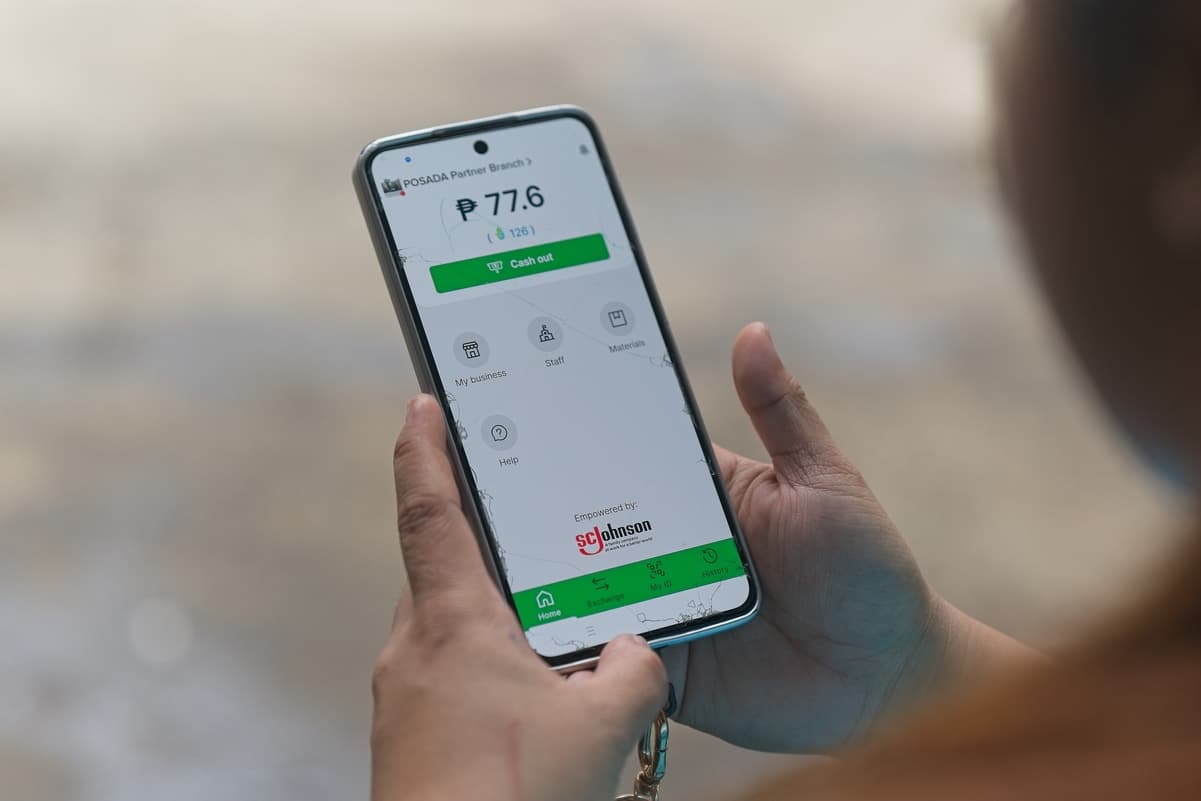
A collection member viewing their peso balance and cash-out button in the Plastic Bank app in the Philippines

The bonus is the proof.

Collectors are paid the market rate in cash when they exchange plastic at a branch. Once the chain from collector to processor is complete, they also earn a bonus in Plastic Bank tokens, paid straight to their digital wallet.

One token is worth 0.01 USD, and the default bonus is 7 tokens a kilogram. Tokens can’t be bought: they are only earned through recycling. Bonuses are paid first in, first out, and the payment is what authenticates the plastic credit.

Collectors cash out to a local e-wallet or bank account, and the tokens they redeem are retired. We monitor branches and processors so the bonus never becomes a reason to lower the market rate.

One platform for everyone in the chain.

The same record serves the collector who is paid, the branch and processor who move the plastic, and the business that backs it.

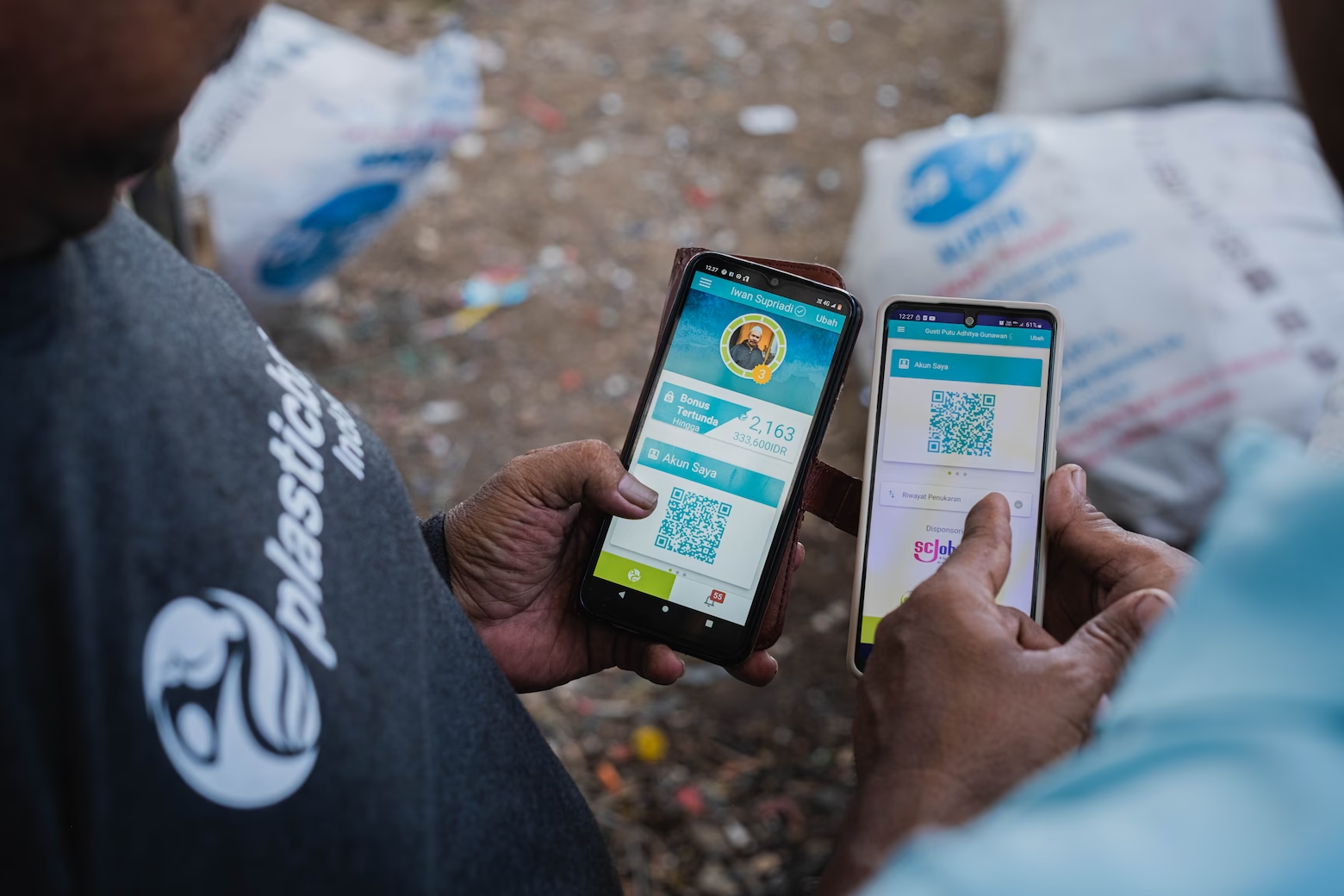
  • Two Plastic Bank collectors in Denpasar, Bali, showing their gathered plastic recorded in the app

    Collectors

    The Plastic Bank app

    Every exchange on record, a digital wallet for bonus tokens, and cash-out to a local e-wallet or bank.

    • Exchange history
    • Digital wallet
    • Cash out to an e-wallet or bank
  • An exchange being weighed and verified at a Plastic Bank collection branch

    Branches and processors

    Tools for the supply chain

    Branches register and age-verify collectors, set market rates and record exchanges. Processors record purchases and upload receipts.

    • Collector registration
    • Market rates by material
    • Receipt upload
  • Laptop displaying the Impact Hub Enterprise logo

    Enterprise

    Impact Hub

    Included with every enterprise order: the audit trail, a locations map and an API.

    • Audit trail and exports
    • Locations map
    • Impact API

Impact reporting your auditors can trace.

Impact Hub is where enterprise partners see their impact, and it is included with every enterprise order. Each order arrives with its audit trail, so you can follow every kilogram back to the collection branch where it was exchanged.

Impact Hub Enterprise dashboard
  1. Audit trail and exports

    Every transaction assigned to your orders, with exports for your own reporting.

  2. Locations map

    The collection branches where your plastic was exchanged.

  3. Traceable KPIs

    Kilograms of plastic collected, the bottle equivalent at 50 bottles a kilogram, the people your impact supported and the communities where collection took place.

  4. Impact API and embedded map

    API keys and an embeddable map to share impact updates on your own website.

A monthly email brings new content and feature releases.

Log in to Impact Hub →

Questions about our technology

Plastic Bank uses a GDPR-compliant, hybrid blockchain in which key transaction data is stored and securely synced to the Plastic Bank app’s private database.

The app’s own system rules approve and secure transactions, so there is no mining or other high-energy consensus protocol of the kind public blockchains use.

See your impact, kilogram by kilogram.