


David Katz — TED@IBM, 2017
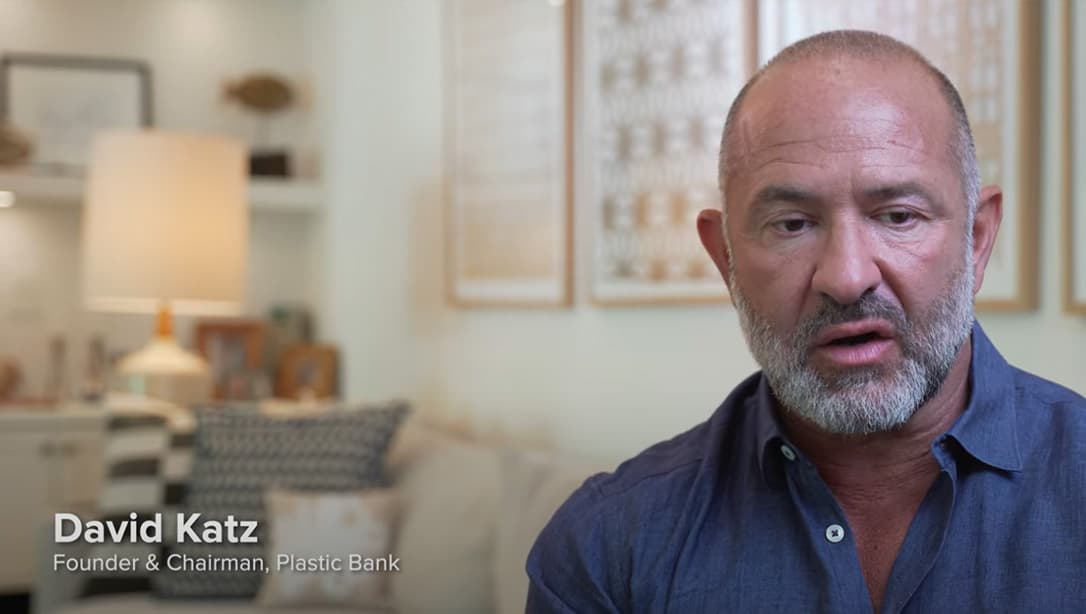
David Katz argues that cleaning the ocean is the wrong approach to plastic pollution. Instead, he introduces Plastic Bank — a chain of stores for the ultra-poor where plastic garbage becomes currency — turning waste into a globally tradable resource called Social Plastic that alleviates poverty and stops plastic at the source.
The Problem: We’ve Had It All Wrong
We’ve had it all wrong. Everybody.
We’ve had it all wrong. The very last thing we need to do is clean the ocean.
Very last. Yeah, there is a garbage truck of plastic entering the ocean every minute of every hour of every day. And countless birds and animals are dying just from encountering plastic.
We are experiencing the fastest rate of extinction ever, and plastic is in the food chain. And I’m still here, standing in front of you, telling you the very last thing we need to do is clean the ocean. Very last.
If you were to walk into a kitchen, sink overflowing, water spilling all over the floor, soaking into the walls, you had to think fast, you’re going to panic; you’ve got a bucket, a mop or a plunger. What do you do first? Why don’t we turn off the tap? It would be pointless to mop or plunge or scoop up the water if we don’t turn off the tap first.
Why aren’t we doing the same for the ocean? Even if the Ocean Cleanup project, beach plastic recycling programs or any well-meaning ocean plastic company was a hundred percent successful, it would still be too little, too late.
We’re trending to produce over 300 million ton of plastic this year. Roughly eight million ton are racing to flow into the ocean to join the estimated 150 million ton already there. Reportedly, 80 percent of ocean plastic is coming from those countries that have extreme poverty.
Introducing Plastic Bank
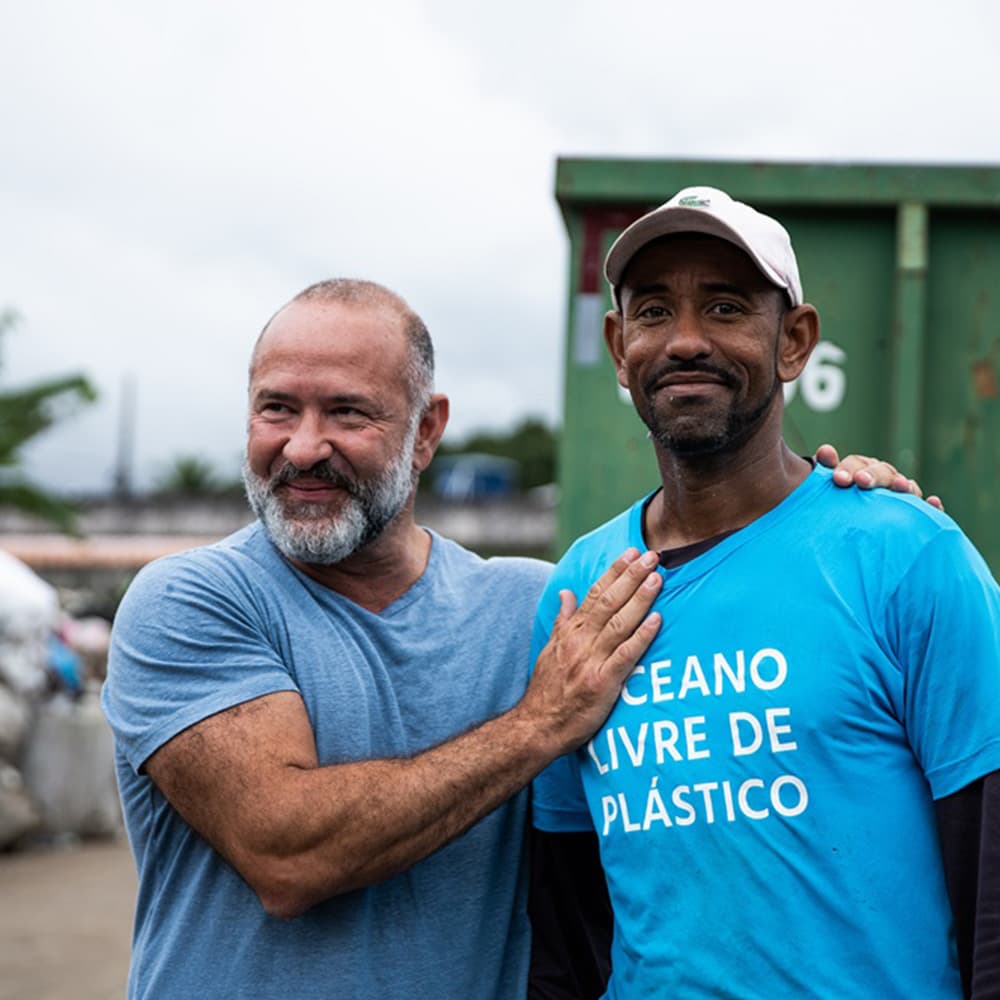
And if you live in the grips of poverty — concerned, always, about food or shelter or a sense of security — recycling, it’s beyond your realm of imagination. And that is exactly why I created the Plastic Bank. We are the world’s largest chain of stores for the ultra-poor, where everything in the store is available to be purchased using plastic garbage. Everything. School tuition. Medical insurance. Wi-Fi, cell phone minutes, power, sustainable cooking fuel, high-efficiency stoves.
And we keep wanting to add everything else that the world may need and can’t afford. Our chain of stores in Haiti are more like community centers, where one of our collectors, Lise Nasis, has the opportunity to earn a living by collecting material from door to door, from the streets, from business to business.
And at the end of her day, she gets to bring the material back to us, where we weigh it, we check it for quality, and we transfer the value into her account. Lise now has a steady, reliable source of income.
The Digital Banking Platform
And that value we transfer into an online account for her. And because it’s a savings account, it becomes an asset that she can borrow against. And because it’s online, she has security against robbery, and I think more importantly, she has a new sense of worth.
And even the plastic has a new sense of value.
And that plastic we collect, and we add value to, we sort it, we remove labels, we remove caps. We either shred it or we pack it into bales and get it ready for export.
Now, it’s no different than walking over acres of diamonds. If Lise was to walk over acres of diamonds but there was no store, no bank, no way to use the diamonds, no way to exchange them, they’d be worthless, too.
And Lise was widowed after the 2010 Haitian earthquake, left homeless without an income. And as a result of the program, Lise can afford her two daughters’ school tuition and uniforms.
Social Plastic and the Circular Economy
Now, that plastic we sell. We sell it to suppliers of great brands like Marks and Spencer, who have commissioned the use of social plastic in their products. Or like Henkel, the German consumer-goods company, who are using social plastic directly into their manufacturing.
We’ve closed the loop in the circular economy. Now buy shampoo or laundry detergent that has social plastic packaging, and you are indirectly contributing to the extraction of plastic from ocean-bound waterways and alleviating poverty at the same time. And that model is completely replicable.
In São Paulo, a church sermon encourages parishioners to not just bring offering on Sunday, but the recycling, too. We then match the church with the poor. Or, I believe more powerfully, we could match a mosque in London with an impoverished church in Cairo.
Global Expansion
Or like in Vancouver, with our bottle-deposit program: now any individual or any group can now return their deposit-refundable recyclables, and instead of taking back the cash, they have the opportunity to deposit that value into the account of the poor around the world.
We can now use our recycling to support and create recyclers. One bottle deposited at home could help extract hundreds around the world. Or, like Shell, the energy company, who’s invested in our plastic-neutral program.
Plastic neutrality is like carbon-neutral. But plastic neutrality invests in recycling infrastructure where it doesn’t exist. And it provides an incentive for the poor by providing a price increase.
Or — like in the slums of Manila, where the smallest market with a simple scale and a phone can now accept social plastic as a new form of payment by weight, allowing them to serve more people and have their own greater social impact.
Social Plastic as a Global Currency
And what’s common here is that social plastic is money. Social plastic is money, a globally recognizable and tradable currency that, when used, alleviates poverty and cleans the environment at the same time. It’s not just plastic. It’s not recycled plastic, it’s social plastic, a material whose value is transferred through the lives of the people who encounter it, rich and poor.
Humans have produced over eight trillion kilograms of plastic, most of it still here as waste. Eight trillion kilograms. Worth roughly 50 cents a kilo, we’re potentially unleashing a four-trillion-dollar value. See, I see social plastic as the Bitcoin for the earth and available for everyone.
Now the entire ecosystem is managed and supported through an online banking platform that provides for the safe, authentic transfer of value globally. You can now deposit your recyclables in Vancouver or Berlin, and a family could withdraw building bricks or cell phone minutes in the slums of Manila.
Or Lise — she could deposit recycling at a center in Port-au-Prince, and her mother could withdraw cooking fuel or cash across the city. And the app adds rewards, incentives, group prizes, user rating.
Looking Forward
We’ve gamified recycling. We add fun and formality into an informal industry. We’re operating in Haiti and the Philippines. We’ve selected staff and partners for Brazil.
And this year, we’re committing to India and Ethiopia. We’re collecting hundreds and hundreds of tons of material. We continue to add partners and customers, and we increase our collection volumes every day.
Now as a result of our program with Henkel, they’ve committed to use over 100 million kilograms of material every year. That alone will put hundreds of millions of dollars into the hands of the poor in the emerging economies.
And so now, we can all be a part of the solution and not the pollution. And so, OK, maybe cleaning the ocean is futile. It might be. But preventing ocean plastic could be humanity’s richest opportunity.
Thank you.